.png)
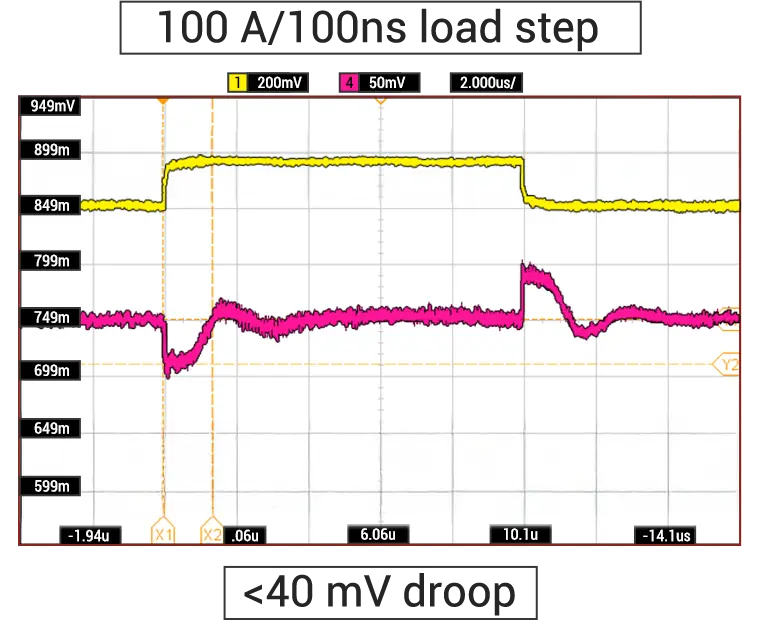
Ferric integrated voltage regulators (IVRs) bring voltage regulation closer to the processor, shortening the power delivery path compared with a conventional power delivery network (PDN). This reduces loop inductance, parasitic impedance, and reliance on bulk capacitance while enabling higher-bandwidth power delivery. The result is faster transient response and more stable voltage during rapid load changes, helping minimize voltage droop as AI processors transition between power states. In the example above, Ferric demonstrates a 100 A/100 ns load step with less than 40 mV of voltage droop.
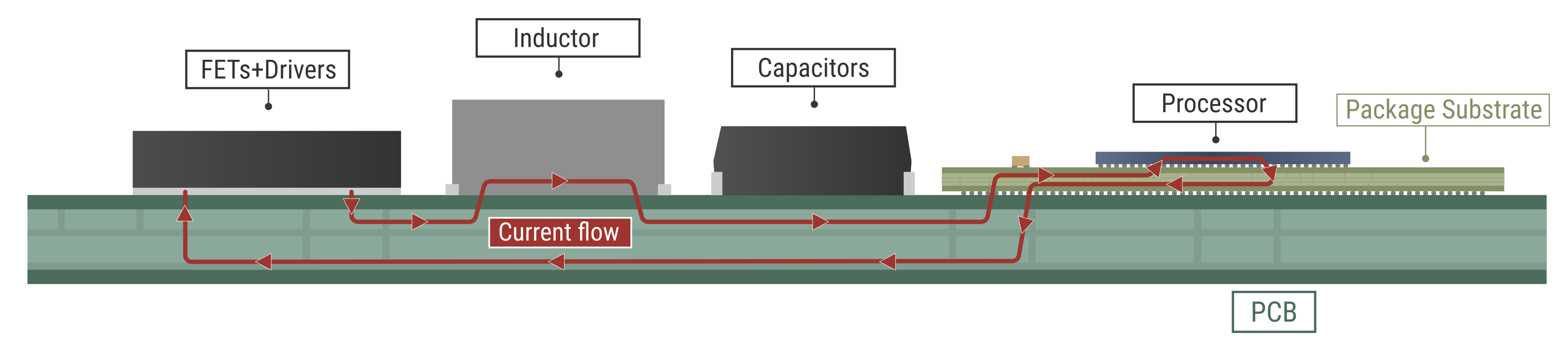
[Conventional Power Delivery Network (PDN)]
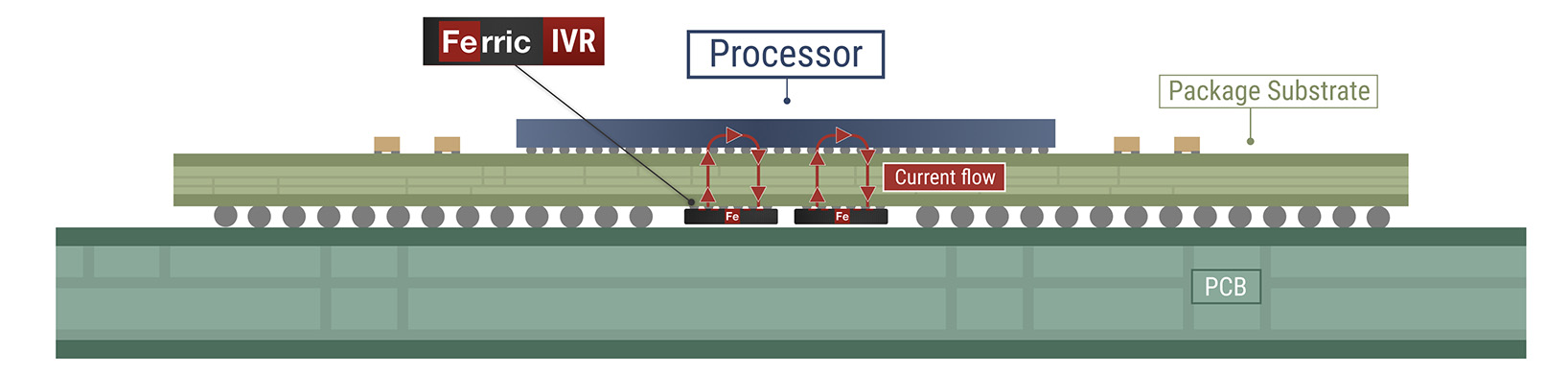
[Ferric Power Delivery Network (PDN)]
Talk with Ferric about IVR integration, processor power requirements, technical specifications, samples, and high-density power delivery architectures.
Contact Ferric →
.png)
We build the world's smallest, most efficient power converters. They power the future of computing and all digital electronics.