.png)
As AI accelerators and high-performance processors demand more current, power delivery is becoming a critical part of system and package design. Resistance, inductance, routing density and package connections increasingly affect how efficiently power reaches the processor.
Ferric’s Fe1767 Newport addresses this challenge with a dual-sided Integrated Voltage Regulator architecture designed to create a shorter, more direct power path to the load.
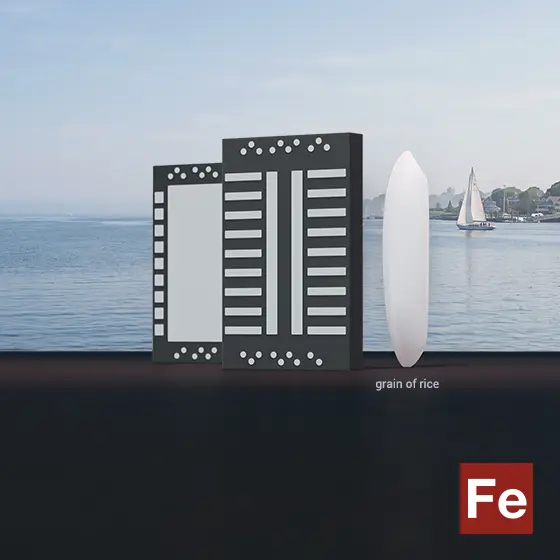
Newport is a 16-phase DC-DC buck converter integrating the controller, power stage, thin-film magnetic inductors and capacitors in a single component. It supports 145 A thermal design current in a 49.8 mm² footprint, delivering 2.9 A/mm² current density. Ferric describes Newport as the world’s first dual-sided IVR.
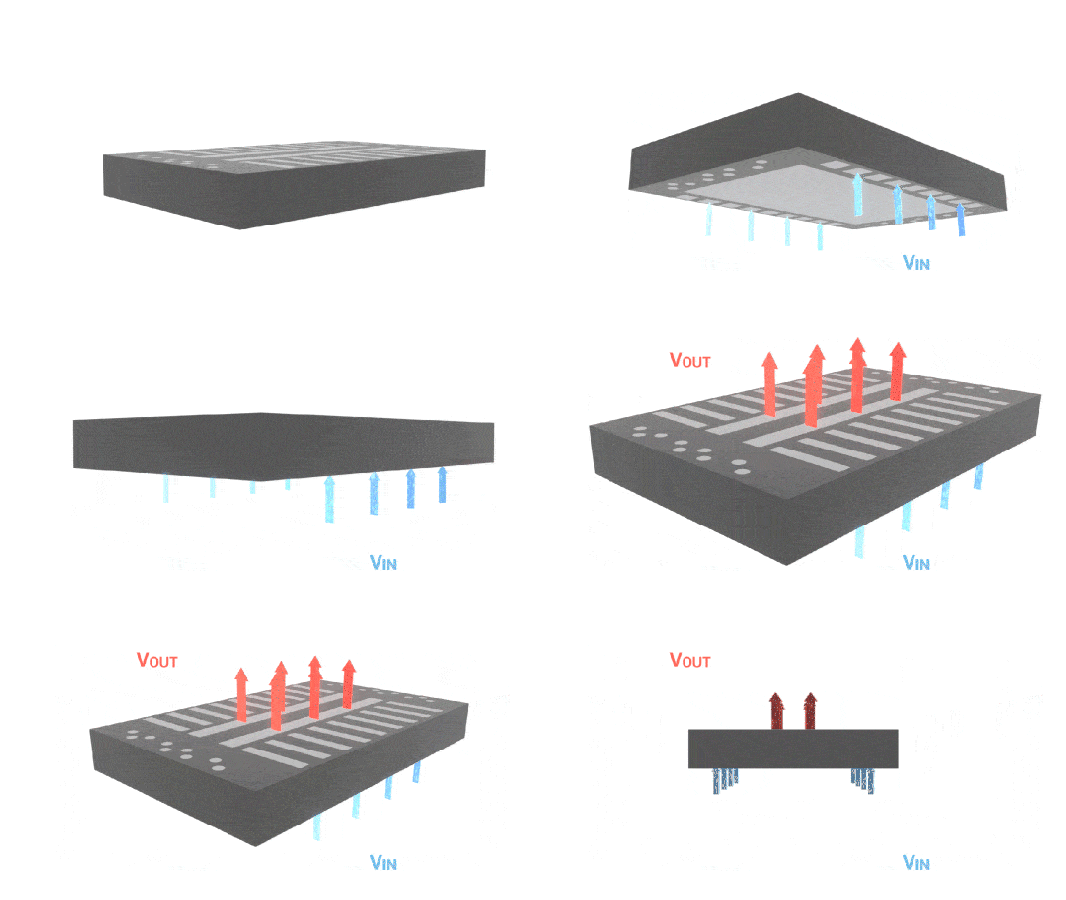
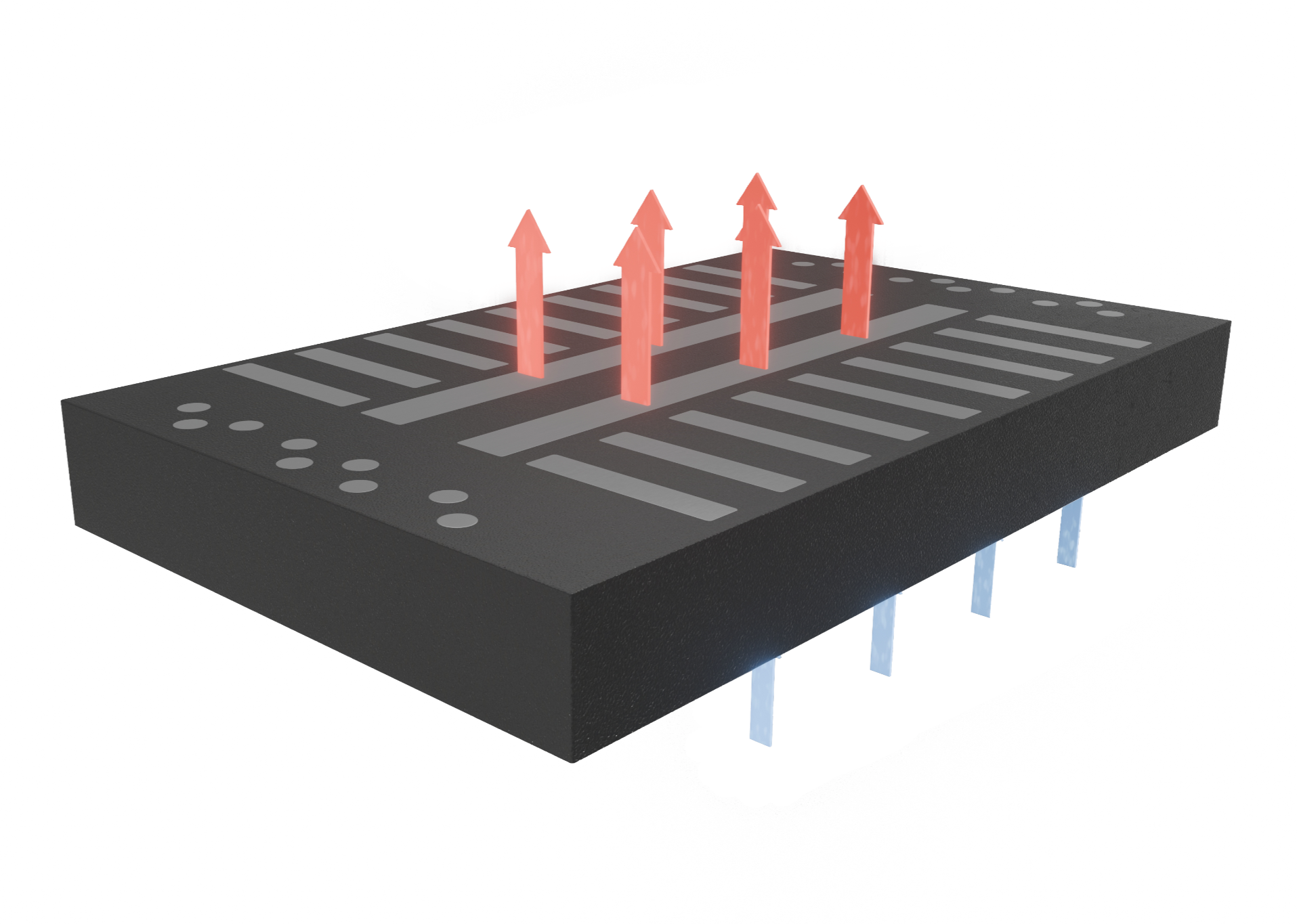
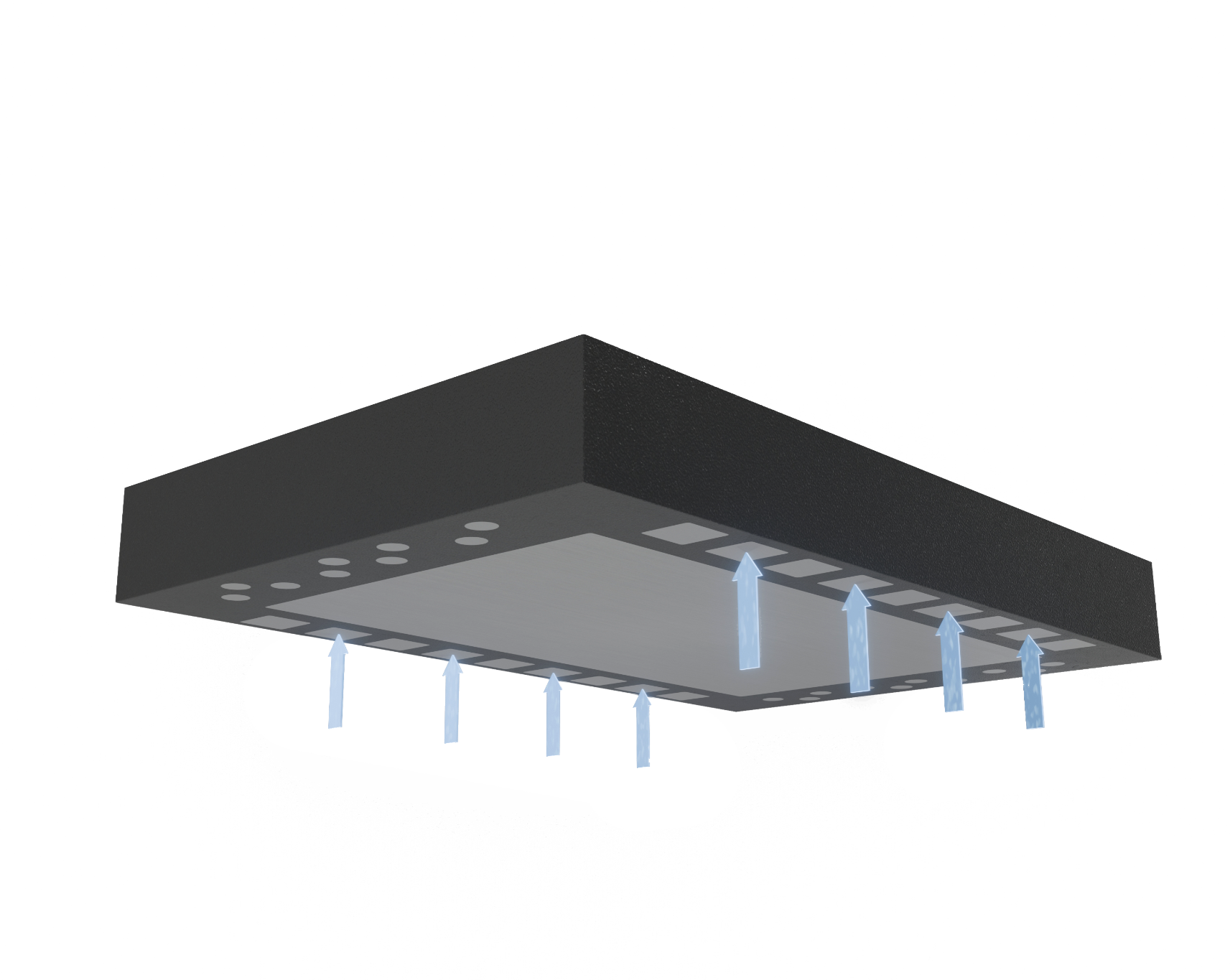
With Newport, input power enters from one side of the device and regulated output exits from the other. This enables a short vertical path from the regulator to the processor while reducing the lateral input-power routing required in conventional architectures.
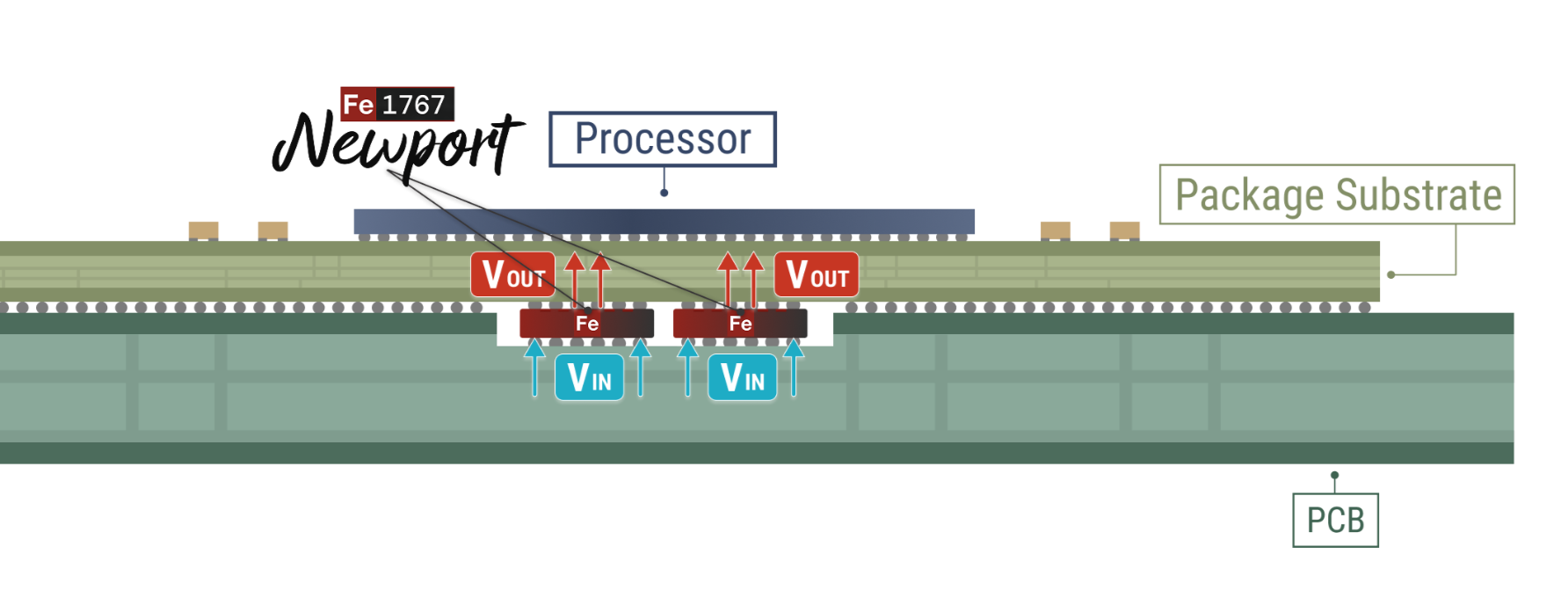
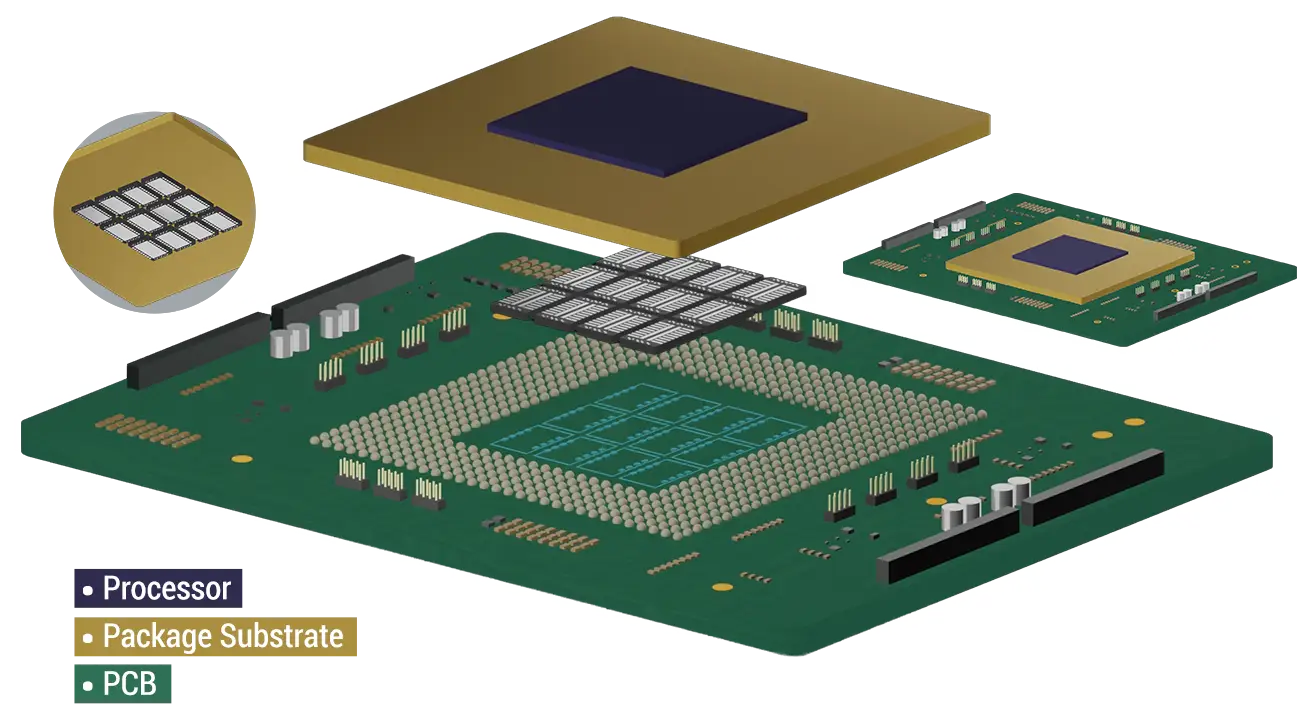
In a land-side integration, the VOUT side of the Newport array connects to the underside of the processor package, while the VIN side is embedded within a PCB cavity. This allows input power to reach the regulator directly from the PCB while regulated output travels toward the processor.
Dual-Side Integration 3D view:
A shorter power path can significantly improve the electrical performance of the power delivery network.
Ferric simulations show 19% to more than 30% droop improvement versus competing IVRs under equivalent transients, and up to approximately 57% improvement compared with traditional lateral power delivery.
Newport also shows a 42–63% reduction in input PDN impedance compared with a backside PCB-attached implementation, helping reduce voltage guardband and output capacitance requirements.
These benefits are particularly important for GPUs, AI accelerators and other high-performance processors that experience fast and significant changes in current demand.
The Fe1767 uses a 16-phase interleaved power train with integrated thin-film magnetic inductors and operates at 15 MHz nominal switching frequency, with operation up to 60 MHz. It also supports dynamic voltage scaling, automatic phase shedding, telemetry, PMBus and AVSBus interfaces.
At a 0.75 V output, Newport achieves approximately 90–91% efficiency, remaining nearly flat through full load with less than 0.5% reduction from peak efficiency.
Newport’s architecture also provides benefits at the package level.
Ferric estimates that the dual-sided approach can save approximately 72 input-side BGA connections per IVR, leaving more package area available for signals, ground and thermal structures while reducing current crowding.
Thermal modeling also shows no meaningful thermal penalty, with a modeled temperature rise of 53°C compared with 55°C for the reference configuration.
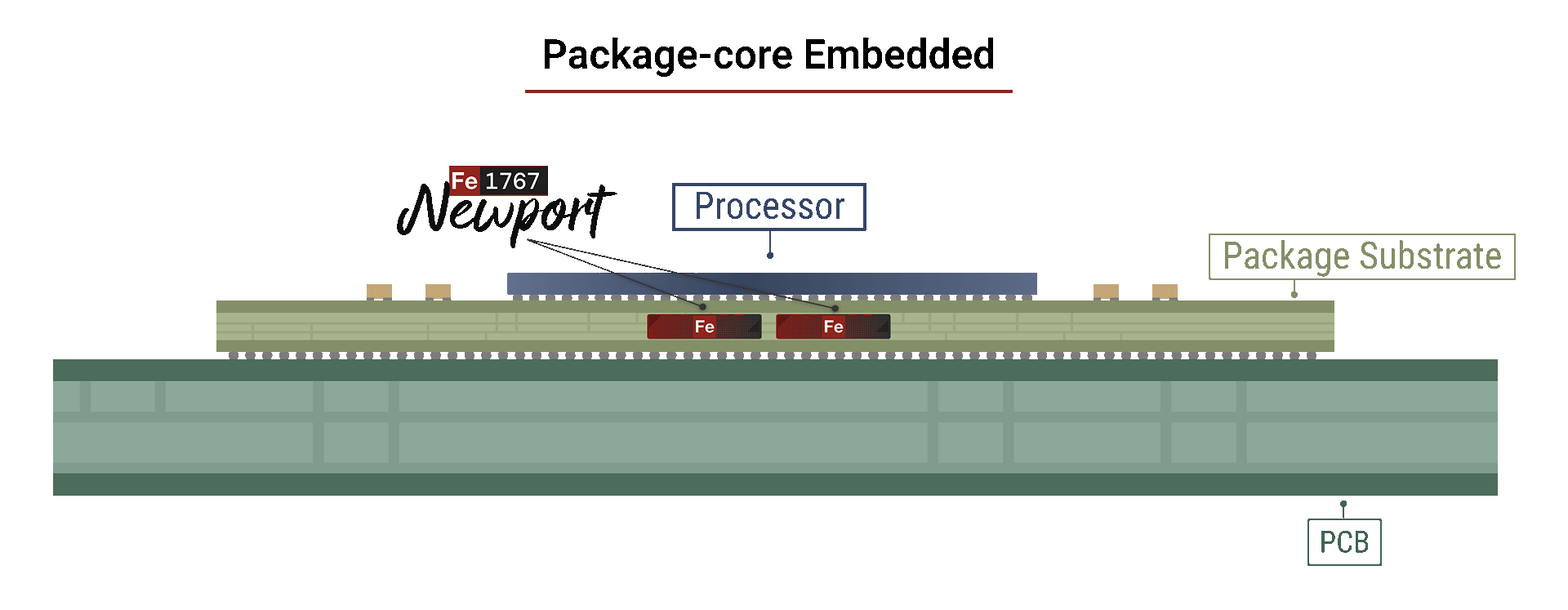
Ferric supports multiple IVR integration methods, including package-core embedding, land-side package attach, land-side integration with dual-side attach, PCB attachment, PCB embedding and die-side package attach. These approaches bring voltage conversion closer to the processor and can reduce the amount of high-current routing required throughout the system.
Discover All Ferric Integration Methods →
Newport is designed for high-performance SoCs, data-center processors, GPUs, TPUs, ASICs and FPGAs.
As processor current density continues to increase, power delivery can no longer be treated only as a motherboard-level function. The distance between the regulator and the load, PDN impedance and package connectivity increasingly influence overall system performance.
By combining high-frequency integrated regulation with a dual-sided architecture, the Fe1767 Newport creates a more direct path between the power source and the processor, enabling a new approach to power delivery for advanced compute systems.
Learn more about the Ferric Fe1767 Newport and Ferric Integrated Voltage Regulator technology.
.png)
We build the world's smallest, most efficient power converters. They power the future of computing and all digital electronics.